How to Play Sail For Eggs: The Core Loop From First Egg to First Upgrades
A beginner's guide to the Sail For Eggs core loop: board your starter boat, steal an egg from an island, run it past the defenders, hatch it on your plot, collect your pet's per-second cash, and upgrade your boat, pen, and base to reach islands with better eggs.
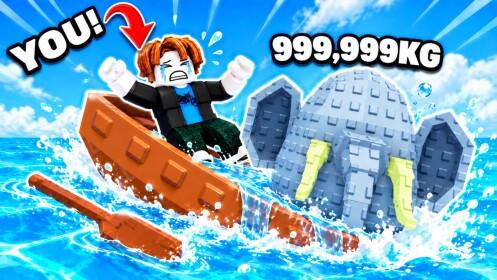
Sail For Eggs runs on one repeating cycle: board your boat, sail to an island, steal an egg, and run it back past the island's defenders. Drop the egg on your plot, wait out its hatch timer, and it opens into a pet that pays you cash every second. Claim that cash at your base, sink it into your boat, pen, and base, and islands with better eggs come within reach — then the whole thing starts again. Here is what your first complete cycle looks like, stage by stage.
The core loop in one minute
- Spawn at your base and board your starter boat.
- Sail to the nearest island or nest with eggs.
- Walk up to an egg and grab it — stealing is that direct.
- Run it back to your boat while the island's defenders shoot at you.
- Sail home, place the egg on your plot, and let its countdown run.
- Collect the pet that hatches; it earns cash per second on its own.
- Claim the pile at your base, spend it on boat, pen, and base upgrades, and sail farther out.
The last step is what turns a one-off trip into a loop: a stronger boat survives farther islands, farther islands hold better eggs, and better eggs hatch into better-earning pets. The game's own blurb says the same thing in one line — sail further out to reach better eggs.
Stealing your first egg
You spawn at your own base with a starter boat. It is small — one first-time player looked his over and found it was "still a canoe" — so pick your boat, board it, and sail toward the closest island holding eggs.
Stealing is refreshingly blunt. There is no minigame: sail over, walk up to an egg, and take it. "Let's get this brown egg. Let's just steal this," one player narrated, before stating the plan that works for everyone: "I can grab this and run."
The run is the dangerous part. The islands are defended, and pirates and guardians open fire on you: "We need to watch out for that pirate over there," followed quickly by "Oh my god, it's shooting, it's shooting!" You cannot shoot back while your hands are full — one player tried and discovered "I can't shoot while holding an egg." Just sprint for your boat; reaching it ends the risky part of the trip. Many players grab a second egg from the same island before leaving ("Let's get two eggs. Just in case"), since the boat ride home is the only leg you can't lose.
For the finer points of raiding nests, see how stealing eggs works.
Bring the egg home, place it, and wait out the hatch
Sail the egg back to your base. The return trip is where hauls are lost — one player dropped his very first egg this way: "Oh no, I missed my first egg!" Once you are home, carry it onto your plot and put it down right away, the way one player did: "let's bring it here and put it down right away."
From that moment the hatch countdown runs on its own; there is nothing to click and nothing to babysit, and the timer is shown right on the placed egg. How long you wait depends entirely on the egg. Across recorded runs, placed eggs have opened in 3 seconds, in 30 seconds, in 1 minute, and in 2, 4, 10, and as long as 18 minutes — so the number on your egg, not any fixed schedule, is the one to trust. If waiting isn't your thing, the game does sell a shortcut: one player staring down a 10-minute timer was offered "Hatch with Robux. Okay. Only nine Robux."
When the timer hits zero, a pet pops out by itself — "Oh my god, a crab! Guys, a crab came out!" — and the earning half of the loop begins. More on what hatches from what: hatching eggs.
Collect the cash your pets print
Hatched pets start earning immediately and pay cash per second with no further action from you. The amounts start tiny and climb fast: one player's very first pet paid $1 a second, a chicken made $8 a second, and later finds for the same player included a walrus at 85 a second and a rainbow jaguar at 1,000 a second. You can check any pet's pay rate by viewing it — "I can view him making me four bucks."
The cash piles up at your base until you collect it — "Let's claim all of this stuff here" — so make claiming part of every return trip. Your animals also keep working while you're gone: the game's own description notes they "earn cash even while offline."
One rule can silently stop the money: when your pen is full, hatched pets pay nothing. One player hatched a parrot, checked it, and got "Why do these make me no money? My pen is full." Keep spare pen space — or buy pen upgrades — so every new pet actually earns. The details live in pet income and the egg pen guide.
Spend your earnings on the next trip
Pet money feeds three upgrade tracks: your boat, your pen, and your base.
Boat upgrades are bought at your boat, and you build them yourself with a hammer — "you're actually rebuilding it and stuff, giving yourself more health," as one reviewer put it; another stressed "We have to do it manually." Expect the first purchase to be gated behind cash. One player clicked upgrade and found "it requires 1000 dollars," and another confirmed his upgrade "only cost a thousand" and took him to 2,000 health. After that, health comes as multiplier buys and levels — players stack "times two" purchases and walk their boat up to 20,000 HP and well beyond.
The reason recorded players pour income into boat health first is written on the map: zones post a recommended HP, the first gate one player ran into read "1,200 recommended," and a trip into a zone you can't survive simply fails — "we just didn't make it... this is why you need more health on your boat." Upgrade enough and new areas unlock: "I upgraded the ship... Now we can go to the second world." Another player later hit a zone that "requires 30,000 HP" and turned around. Treat every gate and price as an example from someone else's run — they differ by zone and shift as the game changes — so the signpost in front of your own boat is the real number. One player summarized his preference by calling health buys "the best upgrades you can get" because "it makes your boat strong super fast," but that's a taste call, not a rule: pen upgrades add pet storage ("place them here and then upgrade pen"), and the game's own tips point at plot upgrades for more storage.
What keeps the loop running
The cycle repeats because both ends refresh. Island eggs run out — crowded servers strip them fast — and come back on timers. Players describe that rhythm differently in different spots: one grumbled that "the egg spawns every 5 minutes and there are like 5 or 6 people, it's gone before I can get it," while other runs watched zones repopulate at the day/night switch — "It's dark, time to reset, we'll go steal more eggs." Treat respawns as approximate and let the island you're camping tell you its own timing.
Stealing runs in both directions, too. Your placed eggs can be targeted while you're out sailing — one player caught a rival mid-raid ("he's trying to steal one of my eggs") and watched his defense recover it ("the boat took it back"). You can also shoot at other players on the open water ("Oh, so we can shoot each other? We can shoot each other?") — just not while carrying an egg. On live servers, expect contests over good eggs rather than a safe stash.
After your first complete cycle
Once you've run the loop end to end, the same cycle just scales up: rarer eggs, bigger pets, farther zones — the game's own steps end at "Discover rarer eggs, pets, sizes, and mutations!" If you want the optimized version — which islands pay best and what to buy in which order — that's the job of the noob-to-pro route, which builds on the loop above. And since free bonus codes come and go separately from gameplay, it's worth a glance at the codes page before a session.
Related Guides
How to Steal From Islands and Players
Clear each zone's power gate, escape island pirates, sink carriers to take their eggs, and keep your own cargo safe.
How to Hatch an Egg Into a Pet
Place a stolen egg on your plot, wait out the countdown, open it on time, and move the pet into your pen.
Money: How to Earn Cash and What to Buy First
Learn how hatched pets pay cash every second, even offline, which sales give instant money, and what to buy first.
Noob to Pro: The Checkpoint Route
A checkpoint route from your first egg to the 1 billion ship, with every boat upgrade and gate power along the way.